Health and Safety Policy for Man With Van Sydenham
 This Health and Safety Policy sets out the standards and responsibilities expected across all moving activities carried out by Man With Van Sydenham. It is designed to protect staff, customers, visitors, and property while ensuring every move is completed in a controlled, careful, and professional manner. Our commitment is to reduce risk, prevent injury, and maintain safe working practices at every stage of the service.
We recognise that removals and transport work can involve lifting, loading, securing goods, and operating in changing environments. For that reason, safe planning, clear communication, and the correct use of equipment are central to our approach. This policy applies to all operatives, subcontractors, and anyone working under the direction of the business.
The principles of this man and van health and safety policy are based on identifying hazards early, acting responsibly, and following established procedures. Every task should be completed with care, using suitable methods and attention to detail. We expect all personnel to understand that safety is not an optional extra; it is an essential part of quality service.
All workers must take reasonable steps to protect their own safety and the safety of others. This includes wearing appropriate footwear and workwear, handling items correctly, and reporting hazards immediately. The safe moving policy also requires that no one performs a task they do not feel competent to complete without support or instruction.
Manual handling is one of the main areas of concern in the removals sector. To reduce the risk of strain or injury, loads should be assessed before lifting, and items should be moved using team lifts, trolleys, straps, or other suitable aids whenever practical. A key part of the Sydenham moving safety policy is ensuring that heavy, awkward, or unstable items are not handled carelessly or rushed.
 Vehicle safety is equally important. Before journeys begin, vehicles should be checked to confirm that tyres, lights, mirrors, brakes, and load areas are in safe working order. Any defect that could compromise the safe operation of the vehicle must be addressed before use. Loads must be secured properly to prevent shifting, damage, or injury during transit.
Work areas should be kept tidy and free from unnecessary obstacles. When moving furniture or boxes through homes, offices, stairways, or communal areas, care must be taken to avoid contact with walls, floors, doors, and fixtures. Where conditions are cramped, slippery, or poorly lit, additional caution is required. The aim of our health and safety policy for movers is to make safe behaviour the norm in every environment.
 Communication is vital during lifting and loading operations. Teams should agree on commands before lifting, confirm routes in advance, and stop work if conditions change. If a customer, resident, or other third party is present in the working area, they should be kept clear of moving operations wherever possible. This reduces the chance of trips, collisions, or dropped items.
Risk assessments should be carried out as part of normal planning. These do not need to be overly complex, but they must be suitable for the task and reflect the actual conditions encountered. A proper removal safety standard considers load size, access points, weather, vehicle parking, and any other factor that may affect safe delivery or collection.
In the middle of the operation, supervisors or designated team leads should monitor progress and respond promptly to any safety concern. 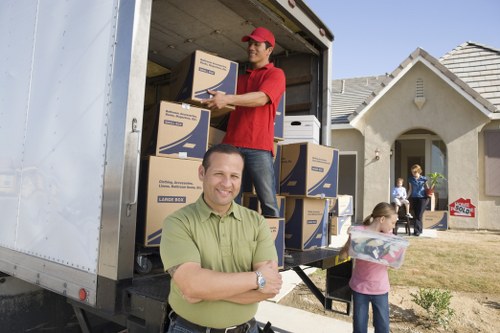 If an item is too heavy, too fragile, or too awkward to move safely, the task should be paused and a better method chosen. Rushing is never acceptable when it increases the chance of harm or damage.
Personal protective equipment may be used where appropriate, depending on the task. This can include gloves, high-visibility clothing, or other items that support safe working. However, PPE should always be seen as the final layer of protection, not a substitute for planning, communication, or proper handling technique.
Accidents, near misses, and property damage must be reported and reviewed so that lessons can be learned. The purpose of this process is not to assign blame, but to improve standards and prevent repeat incidents. A strong man with van safety statement depends on honest reporting and continuous improvement.
Training and competence are essential to maintaining a safe service. All workers should receive instruction relevant to their duties, including lifting methods, safe vehicle loading, hazard awareness, and emergency response. Refresher guidance should be provided when needed so that moving safety practices remain consistent and effective.
Emergency procedures must be understood by everyone involved in the work. If there is an injury, fire, spill, or other serious incident, the immediate priority is to make the area safe and seek assistance through the proper channels. Staff should know how to respond calmly, preserve the scene if required, and avoid making a situation worse.
 We also expect all operations to reflect respect for customers’ property and the wider public. Careful handling, secure stacking, sensible route planning, and attention to environmental conditions all contribute to a safer service. By following this Health and Safety Policy, Man With Van Sydenham aims to deliver reliable transport support while protecting people, goods, and surroundings at every stage.